Key Takeaways:
- White still adds value, but it’s no longer the automatic default. For the first time in nearly a decade, wood cabinetry edged out white in homeowner and designer preference (29% vs. 28%), though the gap is razor thin.
- The real divide isn’t wood vs. white — it’s warm vs. cool. Stark, cool-toned, “clinical” whites are losing favor, while warm whites, creams, and off-whites are holding steady or gaining ground.
- Bold colors are outpacing plain white in buyer premiums. Data shows olive green cabinets adding about $1,597 to sale price and charcoal gray adding close to $2,500 — both outperforming a generic white repaint.
- Not every trendy color pays off. Bright daisy yellow cabinets were linked to homes selling for as much as $4,000 less, proving buyers reward intentional color choices, not just “anything but white.”
- Cabinet painting remains one of the most cost-effective renovations available. Minor kitchen updates (including refinishing) often recoup 75–100%+ of their cost, and painting avoids the “domino effect” of expenses (like countertop removal) that come with full replacement.
- If choosing white, lean warm. Warm white with creamy or beige undertones pairs better with natural materials and photographs better than cool, blue-based white, which is specifically the shade losing resale appeal.
- Painting only works if the cabinet boxes are structurally sound. For homeowners with solid but dated cabinets, painting is almost always the smarter financial move over a full teardown and replacement.
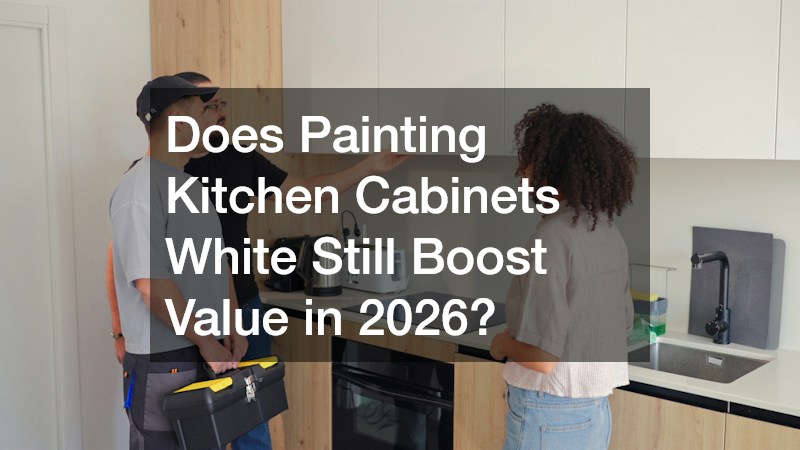
If you’ve been scrolling home renovation content for more than five minutes, you’ve probably noticed a shift. For years, “paint it white” was the default advice for anyone trying to sell their house fast or just make their kitchen feel more expensive. But walk through a few open houses in 2026 and you’ll spot a lot more olive green, charcoal, and warm wood tones than you would have a few years back. So the question homeowners keep asking is a fair one: does a white cabinet repaint still move the needle on resale value, or has the market quietly moved on?
The honest answer is a little more nuanced than a flat yes or no. White still performs well, but it’s no longer the automatic best choice it used to be, and the data backing that up comes from two very different angles. One data set looks at what buyers are actually willing to pay extra for based on cabinet color. The other looks at what homeowners and designers are choosing in the first place, and how that’s shifted. Put those two together and you get a much clearer picture than either one gives you alone.
The Short Answer Before We Get Into the Numbers
Yes, white cabinets can still add value, but the specific shade and finish matter more than they used to. Bright, stark, “clinical” white is losing ground. Warm white, off-white, and cream tones are holding steady or even gaining. Meanwhile, a few bold, specific colors are starting to outperform plain white in certain markets. This isn’t a case of white becoming a bad choice. It’s a case of white becoming one good choice among several, rather than the obvious default it once was.
What the Buyer-Side Data Actually Shows
Let’s start with the numbers that matter most to anyone thinking about resale: what buyers are actually paying more for. An analysis of real estate listing and sale data broke down how specific cabinet paint colors correlate with final sale price. A few things stood out.
- Kitchens with cabinets painted in a deep olive green tone sold for an average of about $1,597 more than comparable homes without that finish, which the report tied to a broader shift toward earthy, organic color palettes and away from sterile, all-white kitchens.
- Charcoal gray performed even better in some cases. Homes with darker, moody gray cabinetry saw offers rise by close to $2,500, a bump the analysis attributed to the finish reading as higher-end and more custom, even on a modest renovation budget.
- Not every color trend helped. The same data flagged bright daisy yellow as a clear miss, with homes featuring that finish selling for as much as $4,000 less than similar listings.
That last point matters just as much as the first two. It tells you the market isn’t simply rewarding “anything other than white.” It’s rewarding specific, considered color choices, and punishing ones that feel dated or overly personal. White was never in the “loses value” category in this data, but it’s also no longer the only color sitting comfortably in the “gains value” column.
What Homeowners and Designers Are Actually Choosing
The second data point comes from a different angle entirely: not what buyers pay for after the fact, but what homeowners and design professionals are actually specifying when they remodel right now. This is where things get genuinely interesting, because for the first time in almost a decade, white didn’t come out on top.
A large-scale trends study tracking kitchen remodels found that among homeowners choosing cabinet finishes in 2026, wood tones edged out white by a hair. Wood came in at roughly 29 percent of choices, with white just behind at about 28 percent, meaning wood cabinetry has overtaken white for the first time in close to ten years, even though the gap between the two is razor thin. That’s not white collapsing in popularity. It’s white finally facing real competition after a decade of being the go-to answer almost by default.
Here’s the part that should reassure anyone currently repainting their cabinets white: the same research draws a sharper line between warm and cool finishes than it does between wood and white. According to that analysis, both wood tones and warm-toned whites continue to hold strong resale appeal, and it’s the stark, cool, monochromatic all-white look popularized in the 2010s that has actually lost favor with buyers. In other words, the story isn’t “white is out.” The story is “one specific version of white is out, and it’s been replaced by softer, warmer alternatives, including softer whites themselves.”
Why Warm White Is Winning and Cool White Is Fading
Put those two data points side by side and a pattern emerges pretty quickly. Buyers are rewarding color choices that feel intentional, grounded, and a little bit custom. A bright, cool white kitchen used to read as clean and modern. Now it’s starting to read as generic, or even a little sterile, especially compared to warmer alternatives.
A few reasons this shift makes sense:
- Lighting has become a bigger design consideration. Cool whites with blue or gray undertones can look crisp in bright, south-facing kitchens, but they tend to feel cold and flat under warmer or dimmer lighting, which describes a lot of real homes.
- Buyers associate warmth with quality. Cream, warm white, and off-white finishes photograph well and feel more expensive, partly because they pair more naturally with wood floors, natural stone, and brass or matte black hardware.
- The “everyone has this kitchen” effect is real. When a specific bright white shade becomes the default across an entire market for close to a decade, it stops standing out. Buyers touring five white kitchens in one afternoon start looking for something that feels a little more considered.
- Darker and richer tones signal a bigger investment, even when they weren’t expensive. That’s part of why charcoal gray and olive green showed up so strongly in the buyer-side data. They read as deliberate design choices rather than a safe default.
None of this means you need to abandon white altogether. It means the specific white you pick matters more than it used to, and pairing it with warm-toned hardware, wood accents, or a textured backsplash can help it avoid that flat, cold feeling that’s falling out of favor.
Breaking Down the Real Return on a Cabinet Repaint
Color trends aside, it’s worth zooming out to the bigger financial picture, because painting cabinets is still one of the more cost-effective kitchen upgrades available. A full cabinet replacement typically runs somewhere in the tens of thousands of dollars once you factor in new boxes, doors, hardware, and the labor to install everything. Painting the cabinets you already have, assuming the boxes are structurally sound, costs a fraction of that.
A few figures worth knowing if you’re weighing your options:
- Industry cost-value reporting on minor kitchen updates, which typically includes cabinet refinishing rather than full replacement, consistently shows these projects recouping well over 100 percent of their cost at resale in the current market.
- Agent surveys and refinishing case studies put the typical return on a well-executed cabinet paint job somewhere in the 75 to 100 percent range of the project cost, which is a strong showing compared to most other home improvement categories.
- A full cabinet replacement often triggers what contractors sometimes call a “renovation domino effect.” Swapping out cabinet boxes frequently means removing and reinstalling countertops, which adds cost and complexity that a simple repaint avoids entirely.
That last point is easy to overlook when you’re budgeting. A repaint isn’t just cheaper up front, it also sidesteps a chain of secondary costs that a full teardown almost always creates. If your cabinet boxes are still solid and it’s really just the finish that feels dated, painting is very likely the more financially sensible move regardless of which color you land on.
How to Choose a White That Actually Performs at Resale
If you’re set on white and just want to make sure you’re picking a shade that still works in today’s market, a few practical guidelines can help:
- Lean warm over cool. Soft, creamy whites with a hint of yellow or beige undertone tend to photograph and show better than stark, blue-based whites, especially in kitchens that don’t get a ton of natural light.
- Test the color at different times of day. Paint a sample board or a single door and observe it in morning, midday, and evening light before committing to the whole kitchen. Undertones can shift dramatically depending on the light source.
- Pair it with warmer materials elsewhere in the room. Wood open shelving, a natural stone or butcher block countertop, and warm brass or matte black hardware can keep a white kitchen from feeling flat or clinical.
- Consider a two-tone approach. Pairing white uppers with a warmer or darker lower cabinet color is a popular middle ground that lets you capture some of the richness buyers are responding to in darker finishes without committing to an all-dark kitchen.
- Avoid anything that reads as overly bright or cool-toned. Stark blue-white or “clinical” whites are specifically the shades losing ground, so if you’re choosing between a few options, skew toward the warmer end of the swatch card.
When Painting Beats Replacing and When It Doesn’t
Painting isn’t automatically the right call in every situation. It works best when the underlying cabinet boxes are structurally sound and the layout still makes sense for how buyers in your market shop. If your cabinets are warped, water-damaged, or the layout itself is genuinely outdated, a repaint can only do so much.
That said, for the majority of homeowners, especially anyone whose cabinets are functionally fine but just look tired, painting checks almost every box:
- It costs significantly less than a full replacement.
- It avoids the secondary costs tied to countertop removal and reinstallation.
- It can be done in days rather than the weeks a full renovation typically requires.
- It reduces landfill waste compared to ripping out and discarding solid cabinet boxes.
- It gives you the flexibility to choose a color that’s currently performing well with buyers, whether that’s a warm white or one of the richer tones gaining ground.
Wrapping It Up
So, does painting your kitchen cabinets white still add value? In most cases, yes, but the version of white matters more than it did a few years ago. The data on what buyers pay for shows real upside from bolder, warmer, or richer finishes, and the data on what people are actually choosing shows wood cabinetry edging past white for the first time in nearly a decade, even if only by a point. Read together, both point toward the same conclusion: stark, cool white has lost its automatic status as the safest resale choice, while warm white, cream, and off-white tones are holding their ground right alongside it.
If you’re planning a repaint purely for resale, a warm white is still a very safe bet, and it remains one of the most cost-effective updates you can make to a kitchen. But if you’re open to a little more personality, the current data suggests buyers are increasingly willing to pay a premium for it, provided the color feels intentional rather than trendy for its own sake. Either way, a fresh coat on solid cabinet boxes is going to outperform an expensive full replacement in almost every realistic resale scenario.